Why Your Blog Posts Need Audio and Video in 2026
How much more traffic do blog posts with video get?
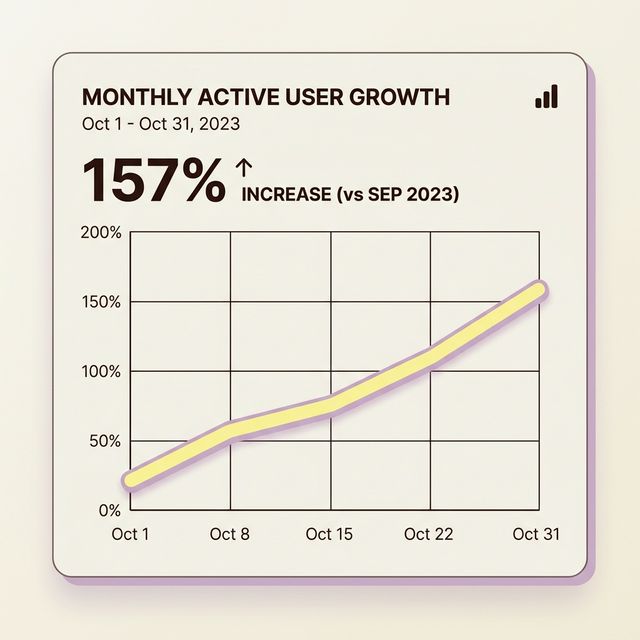
Search results containing video content drive 157% more organic traffic than text-only results, according to a Forrester Research study on multimedia search performance[1].
The reason is straightforward: Google's algorithm interprets video as a signal of content comprehensiveness. A blog post with text, images, and video satisfies more user intent variations than a text-only page. Google Search officially confirms that for pages primarily about individual videos, businesses should create high-quality video content and embed the video near relevant text[2].
How does multimedia affect AI search engine citations?
In 2026, Google AI Overviews, ChatGPT, and Perplexity generate answers by synthesizing content from across the web. Pages that include multiple content formats receive dramatically more AI citations:
- Pages with text + images + video + structured data achieve 156% higher citation rates in Google AI Overviews[3]
- Embedding 3 or more relevant visual elements yields 34% more AI citations[3]
- YouTube is the second most cited domain in Google AI Overviews overall, accounting for 9.51% of all citations[4]
- YouTube is the single most cited domain in AI Overviews outside the top 100 organic results, at over 18% of those citations[3]
"AI Overviews are actively embedding video content directly into search results, giving a measurable edge to brands investing in multimedia. Video content acts as a defense against zero-click search — it creates an inherent click-through necessity that text summaries cannot cannibalize."— OSPEA, AI Search Optimization Report (2026)
This means a dental practice blog post about "dental crown costs" that includes a 2-minute explainer video on YouTube is significantly more likely to appear in ChatGPT answers and Google AI Overviews than a competing text-only article from another dentist.
Why does audio increase time on page?
Reader engagement with text-based content drops after 7 minutes of reading[5]. Most small business blog posts take 3–5 minutes to read. Audio content holds attention far longer.
- 73% of Americans listened to a podcast in 2025 (Edison Research, Infinite Dial)[6]
- 80% of podcast listeners stay engaged through all or most of an entire episode[6]
- Monthly podcast listeners skew toward higher socioeconomic statuses, which aligns with the demographics of customers searching for dentists, lawyers, and professional services[6]
Adding an audio overview to a blog post gives visitors who dislike reading an alternative way to consume the content. Many business owners, service professionals, and busy parents prefer listening while driving, working, or multitasking. A blog post with an audio player captures this audience entirely — a text-only post loses them immediately.
We Add Audio to Every Blog Post.
FreshPosts Growth and Pro plans include audio overviews embedded on every post. Pro adds YouTube video summaries. Starting at €49/mo.
See PlansHow do video blog posts compare to text-only posts?
| Metric | Text-Only Blog Post | Blog Post with Video + Audio |
|---|---|---|
| Organic traffic | Baseline | +157% (Forrester) |
| AI search citation rate | Baseline | +156% AI citation rate (OSPEA) |
| AI Overview citation rate | Baseline | +156% (OSPEA Research) |
| AI citations from visuals | 0 visual elements | +34% with 3+ elements |
| Reader engagement duration | Drops after 7 min | 80% listen through most/all |
| ChatGPT referral conversion | 1.76% (organic avg.) | 15.9% (AI referral) |
Does video need to be professionally produced?
No. According to Google's internal research on YouTube viewer behavior, video viewers report that content relating to their passions and interests is 1.6 times more important than high production quality[7].
For a small business blog, this means a simple 2-minute screen recording explaining "how much a dental crown costs" or "when to replace vs. repair a water heater" outperforms a polished corporate video that lacks substance. Authenticity and usefulness outrank production value in 2026.
Record a 2-minute summary of your top-performing blog post. Upload the video to YouTube (Google owns YouTube and prioritizes its content in search results). Embed the YouTube video at the top of the blog post. Add a full text transcript below the video so AI crawlers can parse the spoken content. This takes 15 minutes and immediately increases the post's ranking potential.
Why should blog videos be hosted on YouTube instead of self-hosted?
Three reasons to host blog videos on YouTube instead of uploading video files directly to a WordPress site:
- Google prioritizes YouTube content. YouTube is the second most cited domain in Google AI Overviews, accounting for 9.51% of all citations[4]. Self-hosted video files receive no YouTube-specific ranking benefit.
- Server performance. Video files are large (50–500 MB per video). Self-hosted videos slow page load times, which directly harms Google Core Web Vitals scores and search rankings. YouTube handles all bandwidth and transcoding.
- YouTube comment optimization. Google's Gemini models use Q&A dialogue in YouTube comments as training data[8]. Managing and seeding high-authority Q&A in YouTube comments directly influences how AI models summarize the video content. This creates an additional citation pathway that self-hosted video cannot replicate.
What schema markup is required for video and audio in blog posts?
AI search engines rely on structured data to discover and understand multimedia content. Two schema types are critical for blog posts with video and audio:
VideoObject schema (required for video)
The VideoObject schema defines the metadata of an embedded video: title, description, thumbnail URL, upload date, and duration. Google's official structured data documentation requires VideoObject for any page featuring embedded video content[2].
Advanced implementation includes Clip schema to identify key moments within the video with timestamps. Clip markup provides a source of "Information Gain" for AI systems to parse and quote directly[3].
Speakable schema (required for audio and voice search)
The SpeakableSpecification schema highlights which sections of a page are optimized for voice assistants and audio playback. For blog posts with embedded audio (podcast-style overviews), providing a searchable transcription layer with speaker labels and chapter times enables AI systems to extract the information[3].
A critical technical requirement: AI crawlers frequently miss JavaScript-injected structured data[9]. All schema markup must be implemented as static HTML (server-side rendered JSON-LD) rather than client-side JavaScript injection.
How should a small business add audio and video to existing blog posts?
The implementation process for adding multimedia to existing blog posts, ordered by impact:
- Start with the top 5 blog posts by traffic. Check Google Search Console. Identify the 5 posts generating the most impressions or clicks. These are the highest-value targets for multimedia upgrades.
- Record a 2-minute video summary for each post. Use a phone camera or screen recording tool. Upload to YouTube with a keyword-optimized title and description. Embed the YouTube video at the top of each blog post.
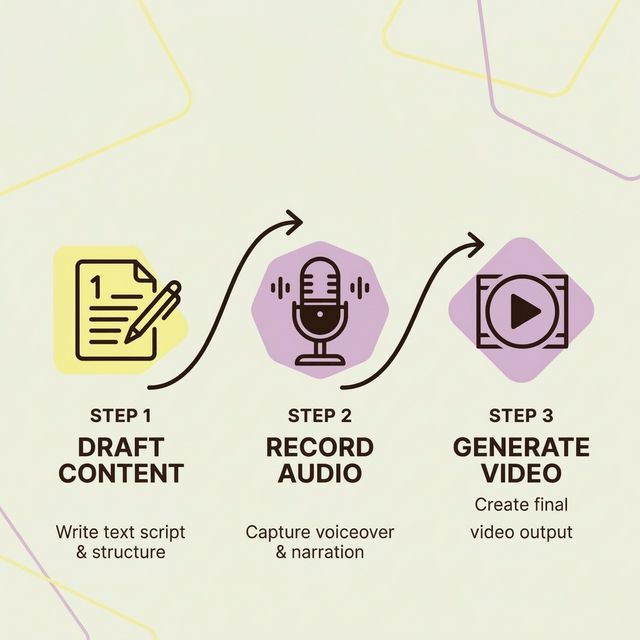
- Generate an audio overview for each post. Use Google NotebookLM, ElevenLabs, or a similar tool to create a podcast-style audio summary. Embed the audio player below the video or at the top of the article.
- Add full text transcripts. Place a written transcript below the video embed. AI crawlers cannot watch videos or listen to audio — the transcript is how they extract the information for citations.
- Implement VideoObject and Speakable schema. Add JSON-LD structured data as static HTML in the page's <head> section. Include video title, thumbnail, duration, and upload date.
- Monitor results in Google Search Console. Compare impressions, clicks, and average position for the upgraded posts vs. text-only posts over 30–60 days.
Frequently Asked Questions
Do blog posts with video get more traffic from Google?
Yes. Search results with video content drive 157% more organic traffic than text-only results, according to Forrester Research. YouTube is the second most cited domain in Google AI Overviews, accounting for 9.51% to 18% of all AI citations.
Does adding audio to blog posts increase time on page?
Yes. Text-based reader engagement drops after 7 minutes of reading. Audio content holds attention significantly longer — 80% of podcast listeners stay engaged through all or most of an episode (Edison Research, 2025). Adding an audio player to blog posts gives visitors an alternative to reading, increasing average session duration and reducing bounce rates.
How does multimedia affect AI search engine citations?
Pages combining text, images, video, and structured data achieve a 156% higher citation rate in Google AI Overviews. Embedding 3 or more relevant visual elements yields 34% more AI citations. YouTube is the single most cited domain in AI Overviews outside the top 100 organic results, accounting for over 18% of those citations.
Do I need expensive equipment to add video to blog posts?
No. Google's research on YouTube viewer behavior found that content relating to viewers' interests is 1.6 times more important than high production quality. A simple 2-minute screen recording or phone video explaining a topic outperforms a polished corporate video that lacks substance.
Sources
- Forrester Research. "The Impact of Video on Search Engine Performance." Referenced in OSPEA AI Search Optimization Report, 2026.
- Google Search Central. "Video structured data documentation." Google Developers, 2026.
- OSPEA Research (ospea.io). "How Multimedia Impacts AI Overviews and Traditional Rankings." Internal analysis of AI citation patterns across ChatGPT, Perplexity, and Google AI Overviews, 2026.
- Authoritas / OSPEA. "YouTube Citation Share in Google AI Overviews." Analysis of 100,000+ AI Overview responses, 2026.
- Orbit Media Studios / HubSpot. "Annual Blogging Survey: Reader Engagement by Content Length." 2025 update.
- Edison Research. "The Infinite Dial 2025: Podcast Listening in America."
- Google / YouTube. "Why We Watch: Understanding YouTube Viewer Motivation." Google Research, 2025.
- OSPEA Research (ospea.io). "Multimodal Optimization: YouTube Comment Signals in Gemini Training Data." 2026.
- OSPEA Research (ospea.io). "Generative Engine Optimization: Visible Information Integrity and Schema Requirements." 2026.

Blog Posts + Audio + Video. Starting at €49/mo.
FreshPosts writes, records, and publishes multimedia blog posts to your site every week. Try 2 posts free.
Get 2 Free Posts