How Much Does a Dental Crown Cost Without Insurance?
- Porcelain crowns: €800–€1,500 (most common choice)
- Metal/gold crowns: €600–€1,300 (most durable)
- Zirconia crowns: €1,000–€3,000 (strongest ceramic option)
- Porcelain-fused-to-metal: €700–€1,400 (compromise option)
- Payment plans available through CareCredit and most dental offices
What Does Each Crown Type Cost?
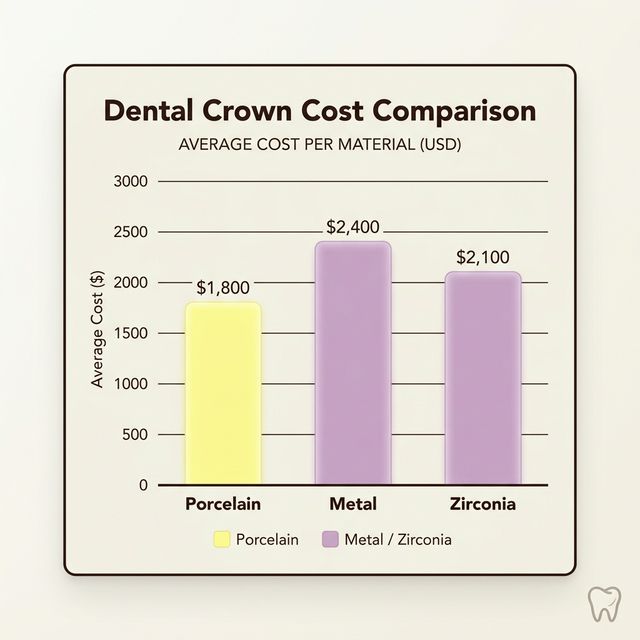
The biggest factor in crown cost is the material. Here's what each type costs and when a dentist might recommend it.
Porcelain Crowns (€800–€1,500)
Porcelain crowns are the most popular choice for front teeth because they look natural. They match the color of your real teeth and are strong enough for normal chewing. Most dentists recommend porcelain for any tooth that shows when you smile.
Metal and Gold Crowns (€600–€1,300)
Metal crowns last the longest — often 20+ years. They're the best choice for back teeth that take heavy chewing force. The trade-off is appearance. They look like metal, so most people only use them where others can't see them.
Zirconia Crowns (€1,000–€3,000)
Zirconia is the strongest ceramic option. It combines the look of porcelain with the durability of metal. According to the American Dental Association, zirconia crowns are growing in popularity because they resist chipping better than traditional porcelain.
Want Posts Like This On Your Website?
We write and publish blog posts to your site every week. Starting at €19/mo.
Get 2 Free PostsWhy Are Dental Crowns So Expensive?
The cost of a dental crown covers more than just the crown itself. You're paying for:
- Lab fees: A dental lab custom-makes your crown to fit your tooth exactly
- Dentist's time: Crown placement usually requires two visits
- Materials: High-quality ceramic and metal alloys aren't cheap
- X-rays and impressions: Digital scans or molds of your teeth
- Temporary crown: You wear one while the permanent crown is being made
How to Save Money on a Dental Crown
If you don't have insurance, there are several ways to bring the cost down:
- Dental schools: University dental clinics charge 30–50% less. Students do the work, supervised by experienced professors.
- Payment plans: Ask your dentist about CareCredit or in-house financing. Many offer 0% interest for 6–12 months.
- Discount dental plans: Not insurance, but membership plans that give you 15–40% off dental procedures.
- Shop around: Prices vary widely between dentists in the same city. Get quotes from 2–3 offices.
- Consider location: Dental crowns in smaller cities typically cost less than in major metro areas.
Call your dentist's office and ask: "What is your cash price for a porcelain crown?" Many offices give a 5–15% discount for paying in full without insurance billing.
How Do You Know If You Need a Crown?
Your dentist might recommend a crown if you have:
- A cracked or broken tooth
- A large cavity that a regular filling can't fix
- A tooth that's had a root canal
- A worn-down tooth from grinding
- A missing tooth (crowns are part of dental bridges and implants)
If your dentist says you need a crown, ask them to explain why. A good dentist will show you X-rays and walk you through your options, including alternatives if a crown isn't strictly necessary.
Frequently Asked Questions

Need Blog Posts Like This for Your Practice?
We write and publish posts to your dental practice website every week. Your patients find you on Google. You get more calls.
Get 2 Free Posts